Speed to Lead Benchmarks: What Top Teams Hit in 2026

Under five minutes. That’s the target for high-intent leads, the ones filling out a demo request or pricing form. Mid-intent leads (content downloads, webinar sign-ups) need contact inside an hour. Low-intent leads (newsletter subscribers, early research) can wait up to 24 hours without much damage.
Here’s the problem: most B2B teams miss all three windows badly. Multiple 2026 benchmark studies put the aggregate median first-response time between 42 and 47 hours, and only a small share of companies manage to contact a lead within five minutes. If your team’s median response time sits north of an hour, you are almost certainly losing the first-responder advantage to a faster competitor, whether that’s another vendor or just a slower internal process.
The fix isn’t complicated, but it does require structure:
- Set tiered SLAs by lead intent, not a single blanket target
- Route leads through automated triage before a human ever sees them
- Track never-responded rate as aggressively as you track close rate
- Build after-hours coverage into the plan, not as an afterthought
Speed to lead benchmarks aren’t a vanity metric. They’re a direct predictor of pipeline. Leads contacted within five minutes are 21 times more likely to qualify than leads contacted after 30 minutes. That single statistic should reorganize how your team prioritizes its first hour of the day.
TL;DR:
- Most companies respond to high-intent leads after an average of 42 to 47 hours, missing the critical five-minute window that greatly improves qualification chances.
- Only about 7% to 23% of firms manage to contact leads within five minutes, with response times heavily influenced by industry, lead value, and staffing models.
- Automating lead triage and implementing tiered SLAs for different lead intents can significantly reduce response times and competitive losses.
- After-hours response gaps often inflate median response times, but AI-based triage and automated routing can help maintain fast contact around the clock.
- Measuring true first meaningful contact and response rates from form submission time rather than CRM logs is essential for accurate speed-to-lead tracking and improvement.
Table of Contents
- What Do the 2026 Speed to Lead Benchmarks Actually Show?
- What Are the Speed to Lead Benchmarks by Industry?
- Why Does Conversion Drop So Fast After a Few Minutes?
- Why Do After-Hours Gaps Inflate Your Median Response Time?
- How Should You Measure Speed to Lead Correctly?
- What Does a Working SLA Ladder Look Like?
- How Is Automation Compressing Response Windows?
- What Should You Fix First to Improve Your Speed to Lead?
- Why Speed Alone Isn’t the Whole Story
- Ready to Close the Gap Between Your Numbers and the Benchmark?
- Key Takeaways
- Sources
What Do the 2026 Speed to Lead Benchmarks Actually Show?
The five-minute rule didn’t come out of a marketing deck. It traces back to the original InsideSales.com and MIT research on lead response management, later summarized by Harvard Business Review, which found that contacting leads within five minutes produced a 21x qualification advantage over waiting 30 minutes. That study is now over a decade old, but its core finding holds up: speed correlates with qualification rate more reliably than almost any other controllable variable in the sales process.
HBR’s research also surfaced a related finding cited widely across the industry: buyers tend to purchase from whichever vendor responds first, a widely observed pattern in industry summaries of that research. The first rep to get a human on the phone typically frames the entire buying conversation, and every competitor who follows is stuck reacting to that frame instead of setting it.
Where 2026 gets interesting is the gap between what’s proven optimal and what’s actually happening. The RevOps Report’s benchmark data shows aggregate medians sitting around 42 to 47 hours, with only a small slice of companies (roughly 7% to 23%, depending on the study and industry mix) hitting the five-minute window at all. That’s not a rounding error.
Part of the confusion comes from how “response” gets defined. An auto-generated email confirmation is not a response. A chatbot acknowledgment that a human never follows up on is not a response. The benchmarks that matter measure first meaningful contact, meaning a real conversation attempt, a live call, a personalized text, or a rep-authored email that moves the conversation forward.
| Response Window | Lead Intent Level | Expected Outcome |
|---|---|---|
| Under 60 seconds | Chat/live interactions | Prevents drop-off before it starts |
| Under 5 minutes | High-intent (demo, pricing) | Captures 21x qualification advantage |
| Under 1 hour | Mid-intent (content, webinar) | Maintains competitive position |
| Under 24 hours | Low-intent (newsletter, research) | Acceptable, but declining fast after |
| 42+ hours (median) | All categories, aggregate | Where most companies actually sit |
A few caveats matter here. Sample sizes and industries vary widely across these studies, so treat the specific percentages as directional rather than universal law. What’s consistent across every credible dataset is the shape of the curve: speed helps, and the benefit is front-loaded into the first few minutes rather than spread evenly across the first day.
Live chat deserves its own callout. Because it’s a synchronous channel, the expected response window drops to under 30 seconds. Offering a chat widget without staffing it, or without an AI handoff ready to engage instantly, creates a worse experience than not offering chat at all. A visitor who types a question and waits three minutes for a reply has usually already closed the tab.
What Are the Speed to Lead Benchmarks by Industry?
Averages hide more than they reveal, and speed-to-lead benchmarks vary sharply by vertical because lead value, agent availability, and buying urgency differ so much across industries.
Real estate sits at one extreme of urgency. A buyer requesting a showing is often comparing several agents simultaneously, and industry data shows real estate response medians varying widely between samples, a spread that reflects how unevenly teams staff evenings and weekends. Insurance tends to move faster on average relative to some sectors, driven by call-center staffing models and compliance-driven contact windows. SaaS and B2B software often land closer to a multi-day median response time, dragged down by handoffs between marketing automation, SDR queues, and account executive calendars.
- Real estate: median often 15 to 47 hours; top performers under 5 minutes during business hours
- Insurance: faster median due to call-center staffing; top performers under 60 seconds for hot transfers
- Home services: highly variable; top performers use instant SMS/call within minutes of a quote request
- SaaS/B2B: median near 42 hours; top-decile teams under 5 minutes for demo requests
- Healthcare: slower medians due to compliance review steps; leaders use AI-first triage to compress this
- Automotive: dealership response varies by lead source; internet leads often lag walk-in urgency
- Legal: intake speed correlates directly with case value; personal injury firms often lead in speed investment
The drivers behind this variance are structural, not random. A team with agents on the phone from 7 AM to 9 PM captures a wider window than one running standard 9-to-5 coverage. A high lead value (a $400,000 home versus a $50 subscription) justifies staffing a night shift or paying for an AI answering layer that a lower-margin business can’t afford. And industries with heavier compliance review, healthcare intake being the clearest example, build in delay by design, even when the underlying system could move faster.
What should you aim for if you want to be in the top 10%? Across most verticals, elite performers hit sub-5-minute contact on high-intent leads during business hours and sub-60-second automated acknowledgment around the clock. AI-enabled teams are increasingly compressing that further, with some industry data showing sub-30-second response times becoming achievable at scale rather than remaining a boutique advantage. That’s the real shift in 2026: automation has turned what used to require a large night-shift staff into something a mid-size team can deploy with the right routing infrastructure.
Why Does Conversion Drop So Fast After a Few Minutes?
The decay curve behind speed to lead isn’t gradual. It’s closer to a cliff than a slope.
Three mechanics drive it. First, attention decay: a prospect who just submitted a form is mentally primed and available. Ten minutes later, they’re back in a meeting, distracted, or scrolling a competitor’s site. Second, competing outreach overlap: most high-intent leads (especially in real estate, insurance, and home services) request quotes from multiple vendors simultaneously, so every minute you wait is a minute a competitor uses to lock in the first-responder advantage. Third, the psychological framing effect, where whoever answers first sets the terms of the conversation, and every later call becomes a comparison against that first impression.
The drop-off isn’t linear. Leads contacted within five minutes convert at dramatically higher rates than those contacted at the 30-minute mark, per the InsideSales/MIT findings, and the curve keeps falling well past that point. By the time a lead sits for several hours, most of the qualification advantage has already evaporated, regardless of how good the eventual sales pitch turns out to be.
Run the math on a mid-size pipeline and the dollar impact gets uncomfortable fast:
- A team processing a moderate number of leads at a typical baseline qualification rate might see that rate improve significantly by compressing response time from hours to minutes. Applied across typical deal values, that improvement can translate into substantial additional pipeline value, without any change to the pitch, the offer, or the close process
Speed isn’t a nice-to-have layered on top of good selling. For a meaningful share of deals, it is the deciding factor before a rep says a single word.
Why Do After-Hours Gaps Inflate Your Median Response Time?
Most teams don’t have a speed problem during business hours.
Here’s how it plays out: a team that responds in four minutes during business hours but takes 14 hours for anything submitted overnight will show a blended median that looks mediocre, even though the daytime performance is excellent. Leads submitted Friday evening or Saturday morning often wait until Monday, which can push P90 times into the double-digit-hours range even when weekday numbers are strong.
Three coverage models close this gap, each with different cost and complexity:
- Auto-acknowledgment only. A confirmation email or text goes out instantly, but a human doesn’t follow up until the next business day. Better than silence, but it does not create the qualification advantage that live contact does.
- AI-first triage. An automated system asks qualifying questions immediately, schedules a callback, or even books a calendar slot, all without a human present until the lead has been warmed and structured.
- Scheduled human shifts. A rotating on-call rep or overflow team covers evenings and weekends directly, which is the most expensive option but preserves live human contact at all hours.
Pro Tip: Pull your last 90 days of leads and split them into “submitted 9 to 5” versus “submitted outside business hours.” If the after-hours median is more than triple the business-hours median, you’ve found your biggest single lever for improving overall performance.
How Should You Measure Speed to Lead Correctly?
Bad measurement produces false confidence, and a lot of teams are measuring speed to lead wrong without realizing it.
Start with the clock. The correct start time is the lead’s original form submission or platform timestamp, not the moment your CRM created the record, which can lag behind the real event by minutes or hours depending on your integration setup. The RevOps Report’s benchmark methodology flags this as one of the most common sources of inflated or misleading speed data. The end point should be first meaningful outbound contact, not an autoresponder.
Build your reporting around these steps:
- Pull timestamped lead data directly from your form or landing page platform, not your CRM’s creation date
- Calculate both median and P90, since average (mean) gets skewed by a handful of extreme outliers
- Track never-responded rate as its own KPI, separate from response time entirely
- Break results down by rep, lead source, and hour of submission to isolate where the gaps live
- Set alert thresholds that flag any lead untouched after 15 or 30 minutes, depending on your SLA tier
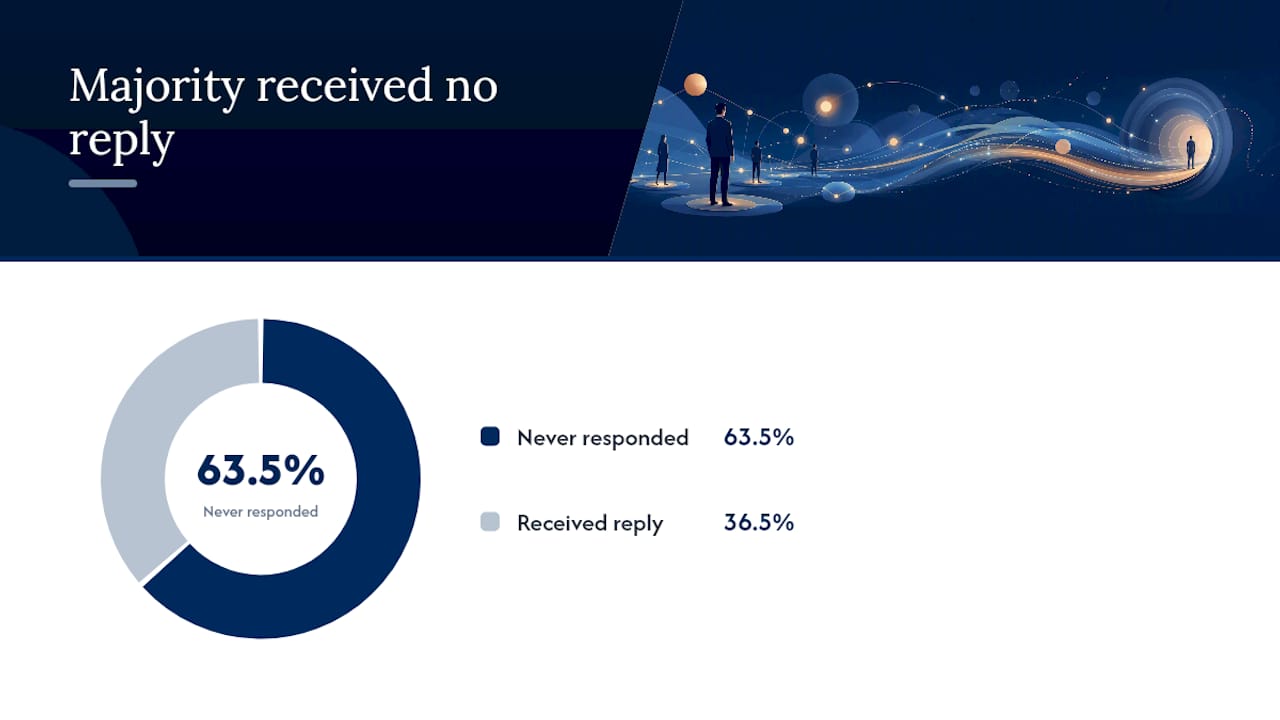
The never-responded rate deserves special attention because it’s the single most fixable number in this whole discipline. One widely cited mystery-shopper study found that 63.5% of demo requests across a sample of 1,000 companies never received a reply at all. Not a slow reply. No reply. That’s not a speed problem, it’s a process failure, and it’s usually the cheapest one to solve.
Your dashboard should surface SLA adherence percentage, never-responded rate, median and P90 by source, and a rolling view of response time by hour of day. Review it weekly, not quarterly. A monthly review cycle means a broken lead routing rule can burn through hundreds of leads before anyone notices.
What Does a Working SLA Ladder Look Like?
A tiered SLA structure beats a single blanket target because it matches your most expensive coverage (instant human response) to your highest-value leads, instead of spreading resources evenly across leads that don’t all deserve the same urgency.
Here’s a workable four-tier structure:
- Elite tier (under 60 seconds): Live chat, hot inbound calls, and your highest-intent web forms (pricing, demo, “contact sales”). Requires automated simul-send (SMS and voice triggered simultaneously) or a dedicated live-response desk.
- Excellent tier (1 to 5 minutes): High-intent leads that don’t require synchronous channels. Automated call routing plus a rep alert should hit this window reliably.
- Good tier (5 to 30 minutes): Mid-intent leads like webinar registrants or content downloads with a clear buying signal attached.
- Acceptable tier (1 to 24 hours): Low-intent leads such as newsletter subscribers or early-stage research traffic.
The routing mechanics matter as much as the tier definitions. Skill-based routing sends leads to the rep best equipped to close that specific lead type. Simul-send patterns fire SMS and a voice call at the same moment rather than sequentially, which cuts dead time between channels. For after-hours coverage, immediate AI qualification keeps the clock running even when no human is on shift, converting a 14-hour overnight wait into a 90-second automated triage.
Ownership rules should be explicit: one named rep or queue per lead, a retry cadence (typically three attempts across the first hour, tapering afterward), and an escalation trigger if no contact happens within the tier’s window. Report on tier adherence weekly, the same cadence as your never-responded tracking.
How Is Automation Compressing Response Windows?
The teams beating these benchmarks in 2026 aren’t relying on faster humans. They’re relying on automated systems that engage before a human ever needs to.

The dominant pattern is a hybrid model: an AI layer makes instant contact, whether that’s a voice call, SMS, or chat response, the moment a lead submits a form. That AI qualifies basic intent and scheduling preferences, then performs a warm transfer to a human agent or inside sales associate (ISA) who picks up an already-informed conversation instead of starting cold. For outbound-heavy teams, predictive dialer routing applies the same logic in reverse, keeping agents on live conversations instead of manually dialing through a list and burning minutes on voicemail.
This is where Revring’s platform plays directly into the SLA ladder concept. The infrastructure connects AI call scoring, smart routing (round robin, skill-based, geo, and multi-buyer ping-post models), and compliance layers (TCPA, DNC, HIPAA business associate agreements) into one system, rather than forcing teams to stitch together five separate tools. Industry-tailored playbooks for insurance, real estate, and healthcare mean the routing logic already reflects how leads behave in that specific vertical instead of applying a generic template.
One documented case involved a real estate team scaling from roughly 40 dials a day to 200 without adding headcount, using automated routing and predictive dialing to compress the gap between lead capture and live contact.
The trade-off worth naming honestly: AI-first triage handles qualification and initial contact well, but complex objection handling still benefits from human judgment. The strongest setups use AI to eliminate dead time, not to replace the conversation entirely.
What Should You Fix First to Improve Your Speed to Lead?
Start with an audit before you touch a single workflow. Pull the last 90 days of lead data, calculate your median and P90 response times, compute your never-responded rate, and segment all three by lead source. That baseline tells you exactly where the leaks are before you spend a dollar fixing anything.
Once you have the numbers, work through these fixes roughly in order of cost and complexity:
- Confirm your form-to-CRM webhook fires instantly, not on a delayed batch sync
- Set up simultaneous SMS and voice triggers for your highest-intent lead sources
- Build automated routing rules so leads never sit unassigned in a queue
- Add after-hours auto-acknowledgment paired with AI takeover for immediate qualification
- Set a hard alert threshold (15 to 30 minutes) that flags untouched leads to a manager
- Audit your never-responded rate specifically and treat any lead over 24 hours untouched as a process failure, not a fluke
- Segment performance by rep and by source to find where training or routing needs attention
- Pilot an AI-plus-ISA hybrid model on one lead source before rolling it out everywhere
- Coach reps on capturing full context at first contact, since incomplete handoffs waste the speed advantage you just built
- Re-audit in 30 days and compare median, P90, and never-responded rate against your baseline
Pro Tip: Don’t try to fix all ten at once. Wiring your webhook and adding simul-send SMS/voice usually delivers the fastest visible improvement, often within the first two weeks, before you invest in a larger AI pilot.
Why Speed Alone Isn’t the Whole Story
Everyone quotes the five-minute rule. Fewer people talk about what happens after the fast response, and that’s where most of the real advantage actually gets built or lost.
Speed without context is a wasted sprint. A rep who calls in four minutes but has no idea what the lead searched for, downloaded, or asked about is still starting from zero, just faster. The teams that consistently outperform benchmarks pair sub-5-minute response with pre-filled context, meaning the rep opens the call already knowing what the prospect wants. That combination, not speed in isolation, is what actually separates top performers from teams that just bought faster software.
The resistance I see most often isn’t technical, it’s cultural. Sales teams worry automation will feel robotic, or that AI-first triage means losing ownership of the relationship. Tailored playbooks, built around how a specific industry’s leads actually behave, tend to resolve that friction faster than generic automation ever does, because reps see the AI handling grunt work instead of replacing their judgment.
If you’re starting from scratch, sequence it: measure your baseline first, eliminate never-responded leads next, pilot automation on one segment, then scale what works.
— Marc
Ready to Close the Gap Between Your Numbers and the Benchmark?
Knowing the benchmark and hitting it are two different problems. Most teams that fall short aren’t lacking motivation, they’re running on disconnected tools: a CRM that doesn’t trigger instant outreach, a dialer that isn’t tied to lead scoring, and no compliance layer built for regulated industries like insurance or healthcare.
Revring closes that gap by connecting the pieces the SLA ladder actually requires into one system: AI-driven routing and automation, predictive dialing that keeps agents on live calls instead of manual dialing, and industry-specific playbooks for real estate, insurance, and healthcare that already reflect how leads in those verticals behave. Compliance infrastructure (TCPA, DNC, HIPAA business associate agreements) is built into the workflow instead of bolted on afterward, so faster response doesn’t mean cutting corners.
If your team’s median response time is closer to 42 hours than 5 minutes, that’s the exact gap this platform is built to close. Schedule a demo to see how your current lead volume would route through an SLA ladder built for your industry.
Key Takeaways
Hitting five-minute response on high-intent leads produces measurably higher qualification rates, yet most B2B teams still average 42 to 47 hours to first contact.
| Point | Details |
|---|---|
| Five-minute window drives results | Leads contacted within 5 minutes are 21x more likely to qualify than those contacted after 30 minutes. |
| Most teams miss the benchmark badly | Aggregate medians sit near 42 to 47 hours, with only 7% to 23% of companies responding within 5 minutes. |
| Never-responded rate is the cheapest fix | One mystery-shopper sample found 63.5% of demo requests never got a reply at all. |
| After-hours gaps skew your real numbers | Weekend and evening leads often wait far longer, inflating both median and P90 response times. |
| Automation closes the gap at scale | Revring pairs AI routing, predictive dialing, and industry playbooks to compress response windows without adding headcount. |